
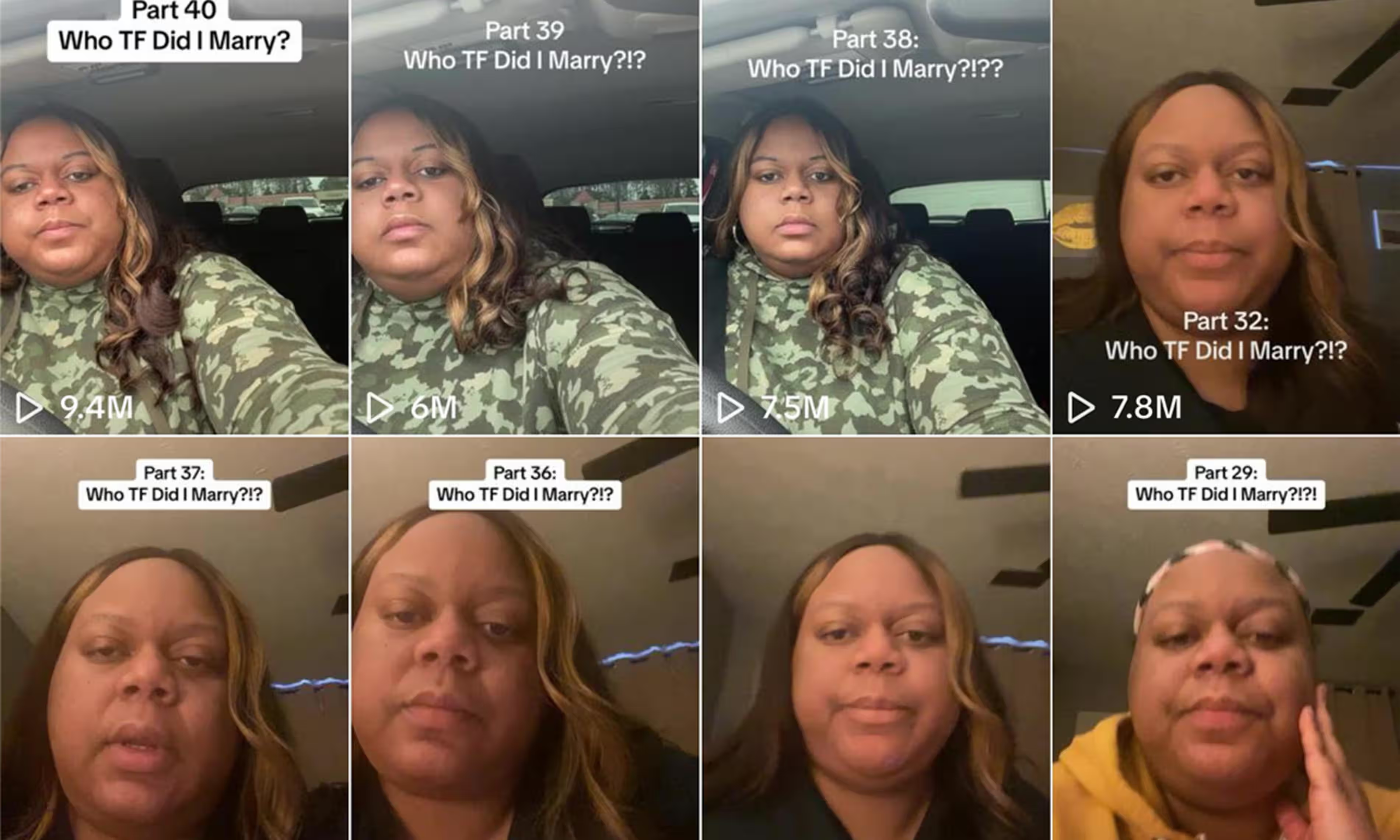

Late last year, it was announced that the viral TikTok series, “Who TF Did I Marry” was going to get its own TV show, produced by and starring Natasha Rothwell. The TikTok series consists of 50 videos and tells the story of an ordinary woman, Tareasa Johnson, who was scorned by a pathological liar. The series was posted over three days in February 2024 went viral so quickly that it now seems to have a “cult following.” Fans have also made other TikToks either playing with the popularity of the discourse or making skits explaining the story.
The emergence of this story getting its own TV show joins the large umbrella of “based on a true story” media, which encompasses everything from musicals, to movies, to documentaries. While many have grown up with Untold Stories of the ER and Dateline in the 2010s, BOATS media has attracted waves of followings in streaming in recent years. Notable titles include Hulu’s The Dropout, which stars Amanda Seyfried as Elizabeth Holmes, the CEO of the company, Theranos, who lied to investors about the efficacy of a diagnosing machine. Netflix’s Monster: The Jeffrey Dahmer Story focuses on the infamous serial killer, Jeffrey Dahmer. Both Holmes’ fraud and Dahmer’s murders affect people that are still alive today.

Ever since the release of Monster in 2022, there has been discourse concerning the ethics of creating sensational media around true stories. BOATS media tends to be tragic, deeply dramatic, and incredibly unique. The ethical concern not only lies in the respect for the peoples affected by the tragedies, but also the reasons writers and directors give to audiences to interpret why something that happened happened.
The Holmes and Dahmer cases fall under this other umbrella of BOATS media called, “True Crime.” True Crime has taken many formats, and follows the sensationalism of mainstream journalism. Bailey Sarian, who had just signed with Underscore Talent is a longtime YouTube sensation with the hit series, “Murder, Mystery & Makeup”, which also adopts the legacy of filming oneself putting on makeup or giving makeup tutorials on YouTube throughout the 2010s.

“Who TF Did I Marry” now takes on more campfire elements of watching someone put on makeup and someone talking to their phone in a parked car, without the tragedy of death. While the circumstances of “Who TF Did I Marry” had deep consequences for the victim, Johnson’s telenovela-coded storytelling and her control over the dissemination of the story thus far sets it apart from other media that are based on true stories.
“Who TF Did I Marry” also reiterates TikTok as an authority in the changing landscape of moving picture storytelling. Even though it is getting adapted to another format, it sheds light on the conversation of “Vertical” storytelling, which combines TV writing and smartphones/TikTok/Reels as a vessel. It has already been happening for at least a year. @my_drama_series on Instagram is a series of Reels stories and currently has 682,000 followers. The reels act as clips to promote the vertical form production house and mobile app, My Drama.
It is easy to make fun of vertical content such as the ones in My Drama, but “Who TF Did I Marry” will be the first sign of TikTok’s fast-coming authority into the world of traditional video and intellectual property.