
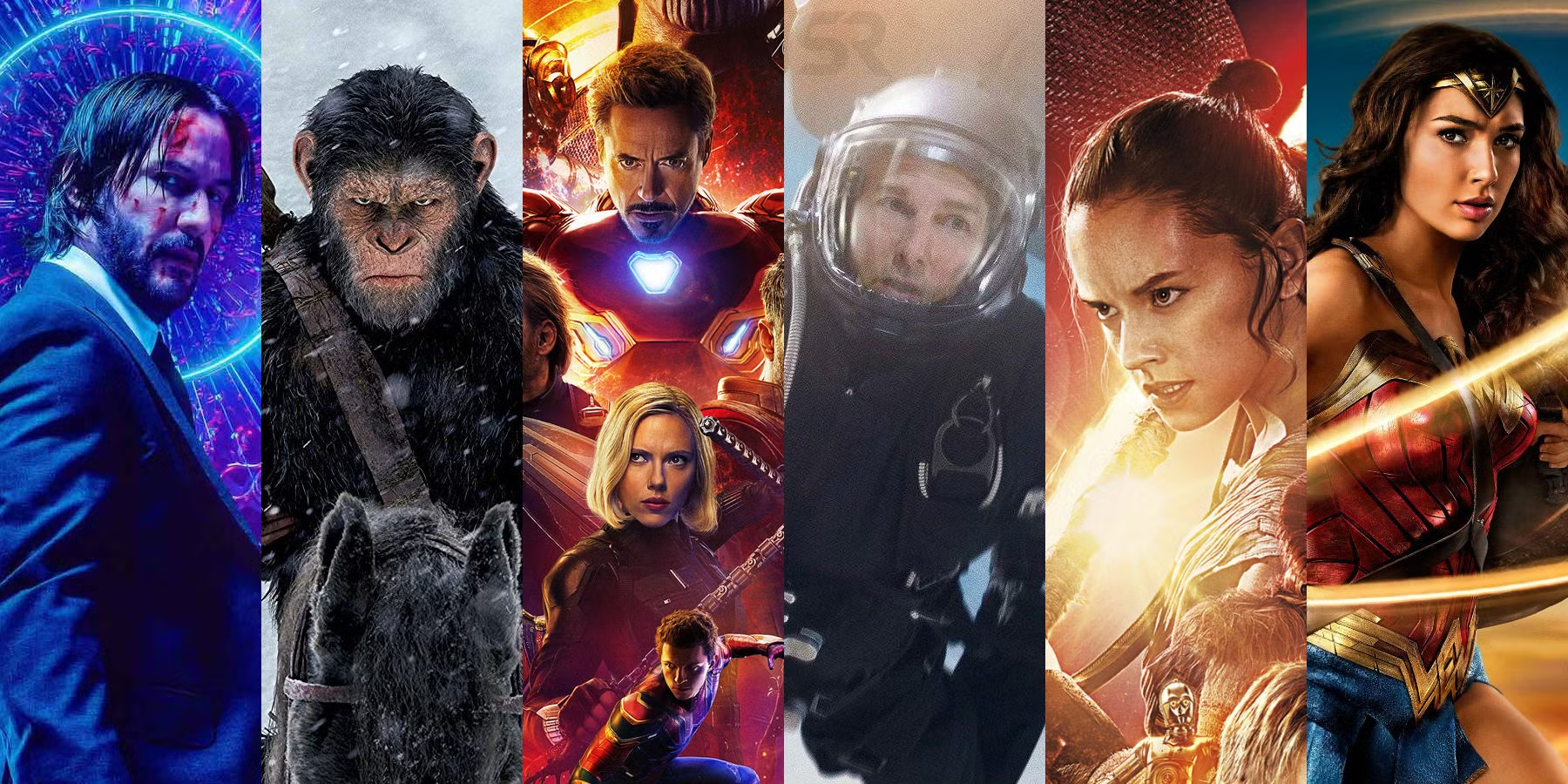

Does this sound familiar? You go to the theater to hang out with your friends and have a fun time watching a movie. You’ve been so busy with other aspects of your life that you don’t know what films are coming out in the future. You get comfortable in your seat and you munch on popcorn as you wait for the previews. As the previews start to roll, you get excited to see a bunch of thrilling trailers for new movies to see down the road. Instead, you are disappointed because 6 out of 8 trailers you watch are for remakes, sequels, or spin-offs for franchises you are more than familiar with. This feels like a situation that happens more and more often, doesn’t it? The question is why?. Why are so many of the upcoming movies we hear about today just continuations of franchises that already exist? Are new creators not getting an opportunity to shine? Are filmmakers scared to give audiences something new? Or has Hollywood simply run out of ideas? Here are some reasons why it feels like originality in cinema is dead
Financial Risks and Guaranteed Returns

The primary reason, which should come as no surprise to anyone, is money. Hollywood leans heavily on remakes, sequels, and spin-offs because making a film is an expensive endeavor, and studios are under immense pressure to ensure that their investments pay off.
More and more people in modern times have become fed up with remakes. The movie and TV industries have become so saturated with making media for established franchises that it now feels like its own genre. Reddit discussions are filled with users who are sick of the reboot trend. From one thread asking, “Is Hollywood running out of ideas?” to another stating, “I’m really so tired of reboots and remakes.”
However, this remake trend shows no sign of slowing down due to the guaranteed return in investment. Creating an original movie is risky because there’s no guarantee that audiences will embrace it. Marketing an entirely new intellectual property (IP) requires extensive promotional efforts to build interest. On the flip side, established franchises already have built-in fan bases, meaning studios can spend less on marketing and still attract a large audience. Sequels and spin-offs can generate billions in box office revenue. As seen with franchises like The Fast and the Furious, Star Wars, and the Marvel Cinematic Universe (MCU). Even when movies from existing franchises like these are bad or underperform, they are still likely to make an incredible profit simply due to their brand recognition.
Furthermore, merchandise also helps to ensure financial security as well. Why waste time spending money on trailers, billboards, commercials, and ad space for new projects when you can market action figures, clothing, posters, and collectibles for established franchises that you know audiences will buy without question? Studios see this as a safe business model, prioritizing familiar franchises over taking a gamble on new, untested ideas.
The Power of Nostalgia

Speaking of familiarity, nostalgia is another driving force behind Hollywood’s reliance on remakes and spin-offs. Many people love revisiting the stories they grew up with, and studios understand the emotional appeal of bringing back beloved characters, settings, and themes.
Nostalgia traps people on memory lane and studios take full advantage of that fact. By connecting to audiences’ emotions, studios are able to fill movie theater seats for nostalgia-based films. This is why franchises like Jurassic Park, Ghostbusters, and Indiana Jones continue to receive sequels and reboots decades after their original success. It’s also why Disney has reimagined many of its classic animated films, such as The Lion King, Lilo & Stitch, and Aladdin, into live-action adaptations. The familiarity of these films draws in older audiences while simultaneously introducing younger generations to iconic stories.
Additionally, streaming services have made it easier for audiences to access older movies, reinforcing their cultural significance. When a beloved classic trends due to its availability on streaming platforms like Netflix or Disney+, studios take notice and capitalize on renewed interest by developing a remake or continuation for said classic.
Easier Production with Existing Material

Another reason for why remakes, sequels, and spin-offs are so bountiful is that they are simply easier to produce. Think about it. Writing an entirely new screenplay from scratch requires creativity, time, and a unique concept that will grab people’s interest. To craft something like this can take years, and by the time it’s done, if it proves unsuccessful then all the effort would feel like it was for nothing. With existing franchises, much of this groundwork has already been done. And even if a movie based on an existing franchise fails, there is less of a loss because not as much time and money was put into the project.
When a studio develops a sequel, it already has a foundation in place. The characters, setting, and fan expectations are well established, allowing filmmakers to focus more on spectacle and less on exposition. Additionally, advancements in technology make it easier to enhance older movies with updated special effects, providing a fresh take while keeping the core elements intact.
Another factor is the evolution of scope in film and television. Studios are more focused on expanding cinematic universes, creating spin-offs that deepen existing worlds rather than crafting entirely new ones. The MCU, Sonic, and the Star Wars franchise are perfect examples of this strategy, where multiple spin-offs allow for extensive storytelling across movies and shows while maintaining brand consistency.
Many fans and critics are tired and annoyed by the amount of remakes, spin-offs, and sequels being produced today. The problem is that this trend will not stop any time soon because the reality is that these projects are successful. As long as audiences continue to support the continuation of existing franchises, these kinds of projects will continue to be produced. Of course there will always be room for original films, but unfortunately original films that come out today likely won’t receive the same kind of recognition, marketing power, and love that movies from familiar franchises do. It’s clear that milking existing franchises for all they have is a formula that works and Hollywood will continue to use for a long time.