


A take on how Alex Vervdoot designed the Kardashian house
To embrace imperfection is equal to calling perfection in the way of living. Kim Kardashian stated that she needed her house to be a space that celebrates peace and imperfections which is contrary to a life full of perfectionism, lights, and flashes she lives outside. Just like that, we all have a need to be okay with imperfection but don’t necessarily have a space that appreciates that which is when the Japanese philosophy of “wabi-sabi” comes into the picture
“Wabi-sabi” is a philosophy thrown around a lot when it comes to its implementation. Wabi-sabi offers an escape from the modern world’s obsession with perfection and accepts imperfections as all the more meaningful – and, in their own way, beautiful. This Japanese concept can help you create a happier home and feel more content with life as it is, rather than always wishing for more.
Authenticity is a big part of Wabi-sabi, so cracks and imperfections are cherished for symbolizing the passage of time and loving use. Embracing Wabi-sabi in the home teaches us to be content with our current lot. This Japanese philosophy encourages us to focus on the blessings shining in our daily lives and celebrate the way things are rather than craving how they should be. “Wabi-Sabi is a way of life that appreciates and accepts complexity while at the same time values simplicity. […] Nothing lasts, nothing is finished, and nothing is perfect.” writes Richard Powell in his book, Wabi-Sabi Simple.
If there is an artist who steals the insignificance it has received from those who understate it, it’s Axel Vervdoot, the “maestro of minimalism”. Axel is a Belgian designer who treasures art and collects antiques
Axel Vervoodt
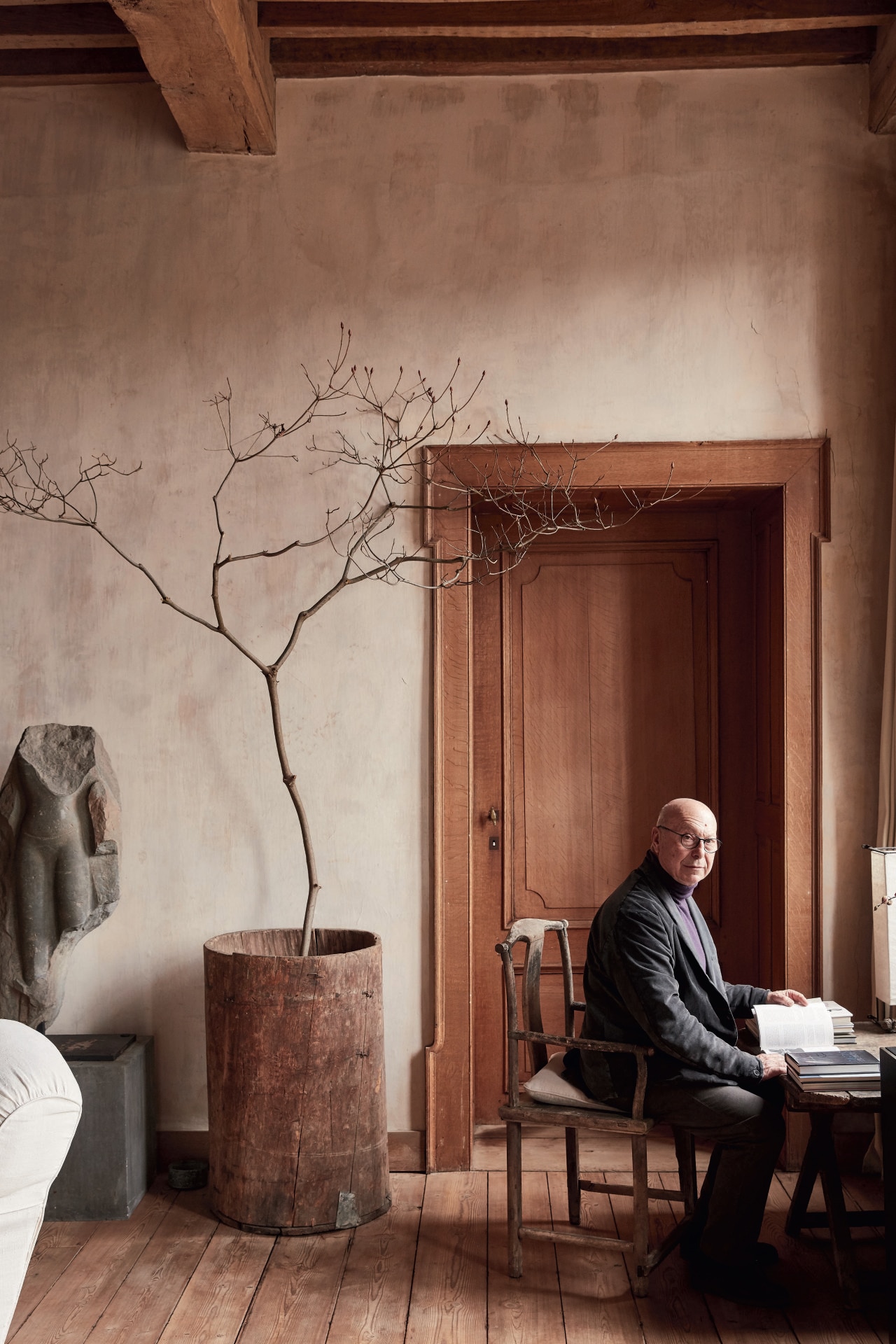
Most of Axel’s clients expect a splendid renovation of an antique armoire or even flipping an 18th-century castle house but what they get through his creations is a disguised fundamental philosophy of living which is intensely reflected in the residential interior project he took up from Kanye West and Kim Kardashian, the Minimal Monastery
Axel Vervoodt and the KK house

Now, what separates Axel from being one of my liked architects is his approach toward his projects. As Kanye described, his style of architecture when designing a house relies on proportion which happens to be the only required decoration. Earthy tones, accented pales, and subtle whites attach his creations with a character. His style of architecture believes in being subconsciously associated with time and space. As mentioned in one of his lectures “ We get only one chance to make a moment” irrespective of how the moment looks, it’s only real if there’s no constant need to change it. The incorporation of nature justifies this philosophy of his in most of his works. His design, like this one, surrounds it rather than just being an external muse or an internal artifact. Each of his houses has a personality that looks proud, accomplished, quiet, composed, and self-aware when greeted.

Picking on Kim’s notes of how they had a vibrant and flashy life outside and wanted a contrary life on the inside, Axel made intense use of the most effortless element, daylight. The walls wearing the veils of white and cream hues called for more light to enter the house and synchronize the functionality between the indoors and outdoors. Coming to the elements of the interiors such as the armchairs and coffee tables, were designed to add simplicity to the space rather than an oomph.
Inspiration from Alex Vervoodt

Today if I were to create an Axel-inspired project, I would have focused on what’s found and not look (environmental architecture), I would have tried to not search for completeness in an element whose nature of being is to be the way it is (Wabi-philosophy) Lastly, I would have focused on hues than the surface colours.