


I was staying at a friend’s place for a few weeks. Both of us got into this rut of watching The Summer I Turned Pretty every Wednesday after work. Unfortunately, my departure was scheduled for another Wednesday morning. Our main concern? We are going to have to miss the viewing of TSITP! I was going to leave on the morning of that particular Wednesday, and we were sitting, eyes glued to the TV at 3 a.m., watching Belly’s love triangle unfold.
As a woman in my early 20s, it’s hard not to see myself in Belly, in her yearning and being yearned for, in her choices (and mistakes), or even in the “what ifs” that drift behind every intrusive thought of “you could have been mine”. But what I did realize (other than the feral obsession) watching this latest season is that this show isn’t just about first love or heartbreak. It has become a cultural engine—and yes, an economic one as well.
There is one question this summer that has grazed each one of us who is obsessed with the conversations of Team Conrad and Team Jeremiah. What makes The Summer I Turned Pretty more than just another YA show? For starters: Jenny Han. After To All the Boys I’ve Loved Before, she earned the trust of all the girlies and their girlie pops. “I always knew how I wanted to end the books. But with the show, I went into it with an open mind. I wanted to approach it with fresh eyes and just see what sort of magic happened on screen”, said Jenny Han. And she delivered—layered emotion, grief, family, identity, growth. So now, people expect authenticity from her.
Of course! Millennials and Gen Z alike are drawn not just to a story, but to revisiting their own. If the visuals are the body, the soundtrack is the heartbeat. Jenny Han has never failed to project her Swifty self in her literature or her show. Taylor Swift’s music was central to her when writing the trilogy. Han has often mentioned in her interviews that she listened to Swift’s 2008 album ‘Fearless’ on repeat. To get Swift’s music into the adaptation, Han even wrote a handwritten letter. She said she felt Swift “bet on women” by allowing multiple tracks. Over the seasons, songs like This Love (Taylor’s Version), Delicate (Taylor’s Version), August, Back to December, and resurfaced classics work as emotional punctuation of the scenes, along with being the background score.

In short, these tracks are “mothering”(Pun intended, maybe). The tracks coupled aptly with Belly’s reinvention era are nurturing our feelings, validating the longing we may have hidden, reminding us of summers we have lived or have longed to live. Music has become a character in TSITP just as much as Belly or Conrad.
Belly and might be the main characters, but Cousins Beach, though fictional, feels like its own protagonist. It’s part film-set, part memory, part aesthetic moodboard. The town’s salt air(no, I am not singing Taylor Swift’s August in my head!), sun-warmed wood, ocean dusk. Find me one person who claims that the scenes between Belly and Conrad do not give them butterflies. Ever since the first season, every summer, trends have shown an uptick in searches, such as: Is Cousins Beach real? Where was TSITP filmed? Those searches aren’t incidental.They are the kind of screen-tourism curiosities that become local economies. We come for the story, stay because the place feels possible.
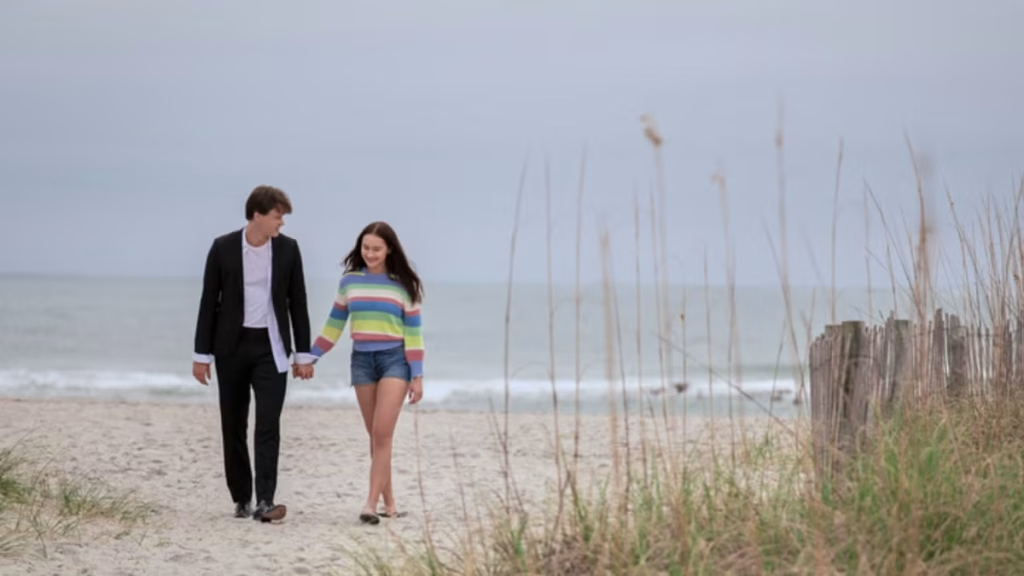
That brings us to the core: pop culture has and will greatly impact the economy. The statement stands true in 2025 more than ever. Culture is not a byproduct—it is a product. The Keynote wrote that pop culture becomes economy when aesthetic, sound, place, and sentiment all congeal into consumer behaviour. It is not just streaming numbers; it’s what people buy, wear, book, post, and “like.” The influence is measurable.
The first point of influence is always fashion & Social Media Trends. Belly’s wardrobe has emerged as the summer template. It was easy for the show to influence the change of the official color of the summer from Butter Yellow to coastal blues. The soft blue Belly wears almost feels like everyone’s summer baseline. TikTok Influencers and fashion influencers are making reels called “Belly Blue Aesthetic.” Girlfriends are raiding Pinterest and TikTok looking for ways to dress their boyfriends like season 3 Conrad.

Influencers benefit from the ripple effect when it comes to their personal finances as well. Friends copying TSITP style, creators remixing scenes, fashion bloggers linking pieces (“here’s my Conrad-inspired shirt,” etc.) Every scroll becomes shoppable. The show functions like an “idea bank” for products, spawning micro-trends, affiliate links, and Etsy merch drops, which are a routine whenever anything in pop culture triggers fan behaviour (#TheSummerILearntPopEconomy). For creators, it’s not just fandom; it’s a lucrative revenue stream. Fan edits take the form of monetizable moodboards; each one solidifies an image that pushes followers toward a cart. This adds another rung to the pop-culture-to-commerce ladder.
Cousins is not real, so people look up Wilmington, North Carolina, Wrightsville Beach, Exeter, and wherever else the show is filmed. Hotels, tour guides, and local content creators all benefit when audiences want to physically step into “Cousins Beach.” It allows travel blogs to create guides to create content like “Visit Cousins Beach: what IS it really, where to stay, where to eat, beach house inspo”; the list is endless. Because the show primes a map in people’s minds, it is hard to resist following the same. That’s screen-tourism.
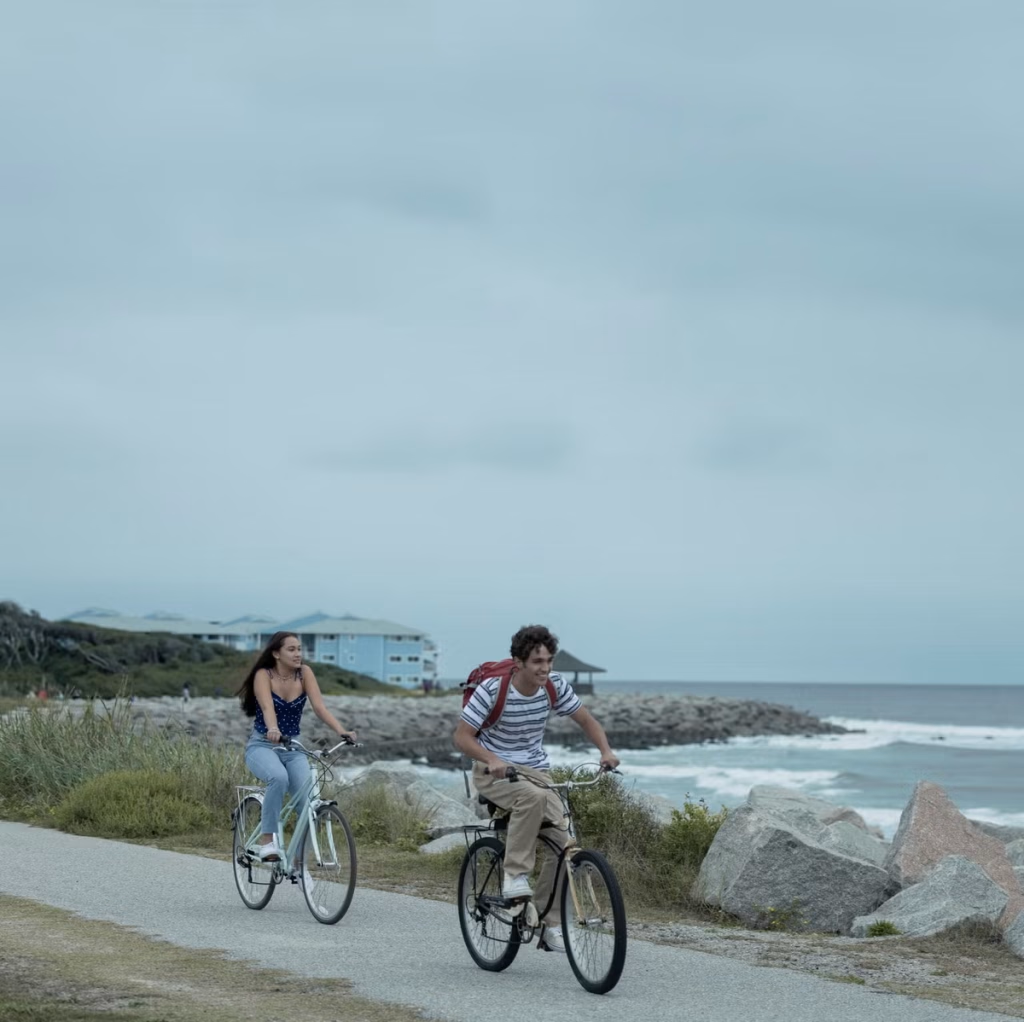
Pop culture used to ripple; now it’s a tsunami in micro-bubbles. A show isn’t just content; it’s aesthetic, it’s soundtrack, it’s merch, it’s tourism, it’s mood. The Summer I Turned Pretty shows that in 2025, fan behavior is triggered when there is an immersive world, not just stories. We want to live them. We want the clothes, the music, the places, the color palettes.
And from watching Belly, from waiting for every Wednesday drop, from seeing my own wardrobe wishlist veer into pastel blue—that has been my summer. TSITP isn’t just turning me pretty; it’s pretty much turning the culture economy upside-down.