


Different types of coffee

Sometimes looking at a Starbucks employee working with his two hands at the speed of four while attending to more than customers at the same time gives all of us anxiety worth enough the price of their coffee. With the growing number of coffee drinkers in this world today coffee has accumulated knowledge as vast as to create an entire community of it. A community that could discuss debatable conversations about “how much ice is too much ice?”
How many types of coffee exist?

There are many types of coffee, but here are some of the most common ones:
- Espresso: A strong, concentrated coffee made by forcing hot water through finely-ground coffee beans.
- Americano: Espresso diluted with hot water.
- Cappuccino: Espresso with steamed milk and foam.
- Latte: Espresso with steamed milk.
- Mocha: Latte with chocolate syrup or powder.
- Macchiato: Espresso with a small amount of milk foam.
- Flat white: Espresso with steamed milk and a thin layer of foam.
- Drip coffee: Coffee made by pouring hot water over ground coffee beans in a filter.
- French press: Coffee is made by steeping ground coffee beans in hot water and then pressing them through a filter.
- Turkish coffee: A strong, sweet coffee made by boiling finely ground coffee beans and sugar in a pot.
These are just a few examples of the many different types of coffee that exist. Different regions and cultures have their own unique ways of preparing and enjoying coffee as well.
And what are the different ways coffee is made?

There are many different ways to make coffee, and the method used can have a significant impact on the taste and aroma of the final product. Here are some of the most common methods:
- Drip coffee: Hot water is poured over ground coffee beans in a filter and drips through into a carafe or mug.
- French press: Coarsely ground coffee is steeped in hot water for a few minutes and then pressed through a mesh filter.
- Espresso machine: Hot water is forced through finely-ground coffee beans under pressure to produce a concentrated shot of coffee.
- Pour over: Hot water is poured over ground coffee beans in a filter that sits on top of a cup or carafe.
- Aeropress: Ground coffee is steeped in hot water for a short period of time and then pressed through a filter using air pressure.
- Cold brew: Coarsely ground coffee is steeped in cold water for 12-24 hours to produce a smooth, low-acid coffee concentrate.
- Turkish coffee: Finely ground coffee is boiled with water and sugar in a special pot called a cezve and then served unfiltered.
- Moka pot: Water is heated in a bottom chamber, steam is forced through finely-ground coffee in a middle chamber, and then brewed coffee is collected in the top chamber.
These are just a few examples of the many different methods of making coffee. Each method can produce a different flavour profile and strength, and coffee enthusiasts often have their own preferred brewing method.
How does a person know which coffee is for them?
Choosing the right type of coffee depends on personal taste and preferences. Here are a few factors to consider when deciding which coffee is right for you:
- Strength: Do you prefer a strong, bold coffee or a milder, more subtle flavour?
- Roast level: Do you prefer a light roast, medium roast, or dark roast? Each roast level can impact the flavour and aroma of the coffee.
- Flavour profile: Some coffees have distinct flavour notes, such as chocolate, citrus, or nutty undertones. Consider trying different varieties to see which flavours you enjoy most.
- Caffeine content: If you’re looking for a caffeine boost, consider choosing a coffee with a higher caffeine content. Keep in mind that the amount of caffeine in coffee can vary widely depending on the type and strength.
- Brewing method: Different brewing methods can impact the flavour and strength of coffee. Consider experimenting with different brewing methods to find the one that produces the flavour profile you enjoy most.
Ultimately, the best way to find the right coffee for you is through trial and error. Try different varieties and brewing methods to see what you enjoy most. Keep in mind that personal taste is subjective, and what works for one person may not work for another.
How do the types of coffee a person drinks describe their personality?
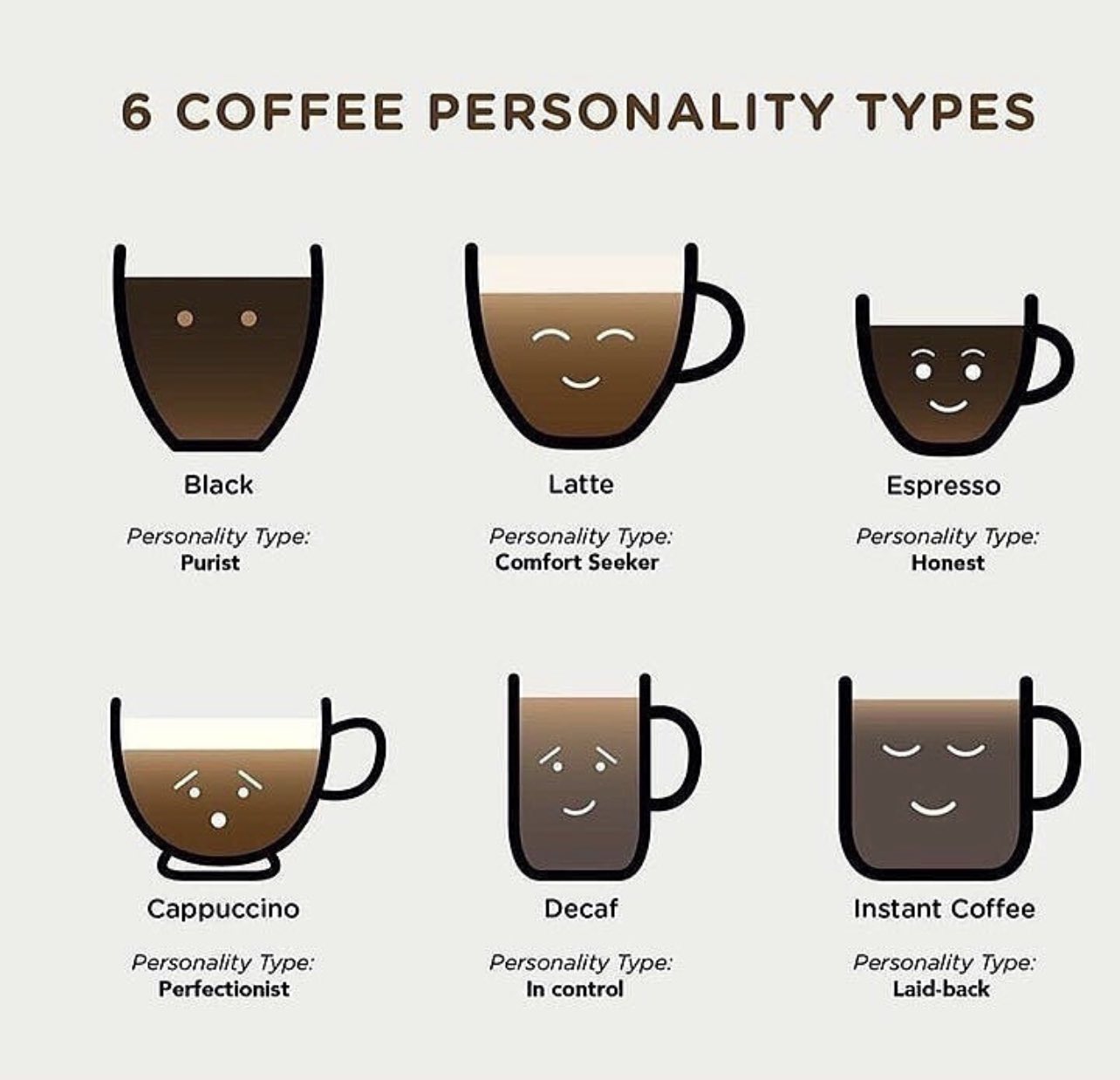
It’s difficult to make broad generalizations about a person’s personality based solely on the types of coffee they drink. However, some people may have certain preferences or habits that could give some clues about their personality or lifestyle. For example:
- Espresso drinkers: People who prefer strong, concentrated espresso shots may be perceived as bold, intense, and efficient. They might also be seen as people who like to get things done quickly and don’t have a lot of time to waste.
- Latte drinkers: People who enjoy lattes, which are often milder and creamier, may be perceived as easygoing, social, and nurturing. They might also be seen as people who enjoy the simple pleasures in life and like to take their time to savour the moment.
- Cold brew drinkers: People who prefer cold brew coffee, which is often smoother and less bitter than hot coffee, may be perceived as trendy, health-conscious, and adventurous. They might also be seen as people who are open to new experiences and like to stay on top of the latest trends.
Of course, these are just generalizations and should not be taken as definitive indicators of a person’s personality. It’s important to keep in mind that personal preferences are complex and can be influenced by a variety of factors, such as taste, culture, lifestyle, and habits.
What are the different types of coffee that can be consumed in respect to a specific occasion?
There are many different types of coffee that can be consumed in various occasions. Here are a few examples:
- Breakfast coffee: Typically a mild or medium roast coffee, often served with breakfast. It’s a good way to start the day and provides a gentle energy boost.
- After-dinner coffee: Often a dark roast coffee, sometimes served with a dessert or as a digestif. It’s a great way to finish off a meal and is often enjoyed as a calming ritual.
- Office coffee: This is typically a quick and easy-to-make coffee that can be consumed on the go or at the office. It may be a simple drip of coffee or a shot of espresso.
- Special occasion coffee: These are typically higher-quality coffees that are brewed with care and served to guests on special occasions. They may include speciality blends, flavoured coffees, or single-origin coffees.
- Iced coffee: A refreshing option on hot summer days, iced coffee can be made with a variety of brewing methods and can be flavoured with syrups or milk.
- Coffee with milk: Milk can be added to coffee to create a variety of drinks, such as lattes, cappuccinos, or flat whites. These drinks can be enjoyed at any time of day and are often associated with socializing or relaxing.
These are just a few examples of the many different types of coffee that can be consumed on various occasions. The type of coffee that is appropriate for a specific occasion may depend on personal preference, cultural norms, and the setting in which it is being consumed
How can coffee help you mentally?
Coffee can have several mental benefits when consumed in moderation. Here are a few ways that coffee may be able to help you mentally:
- Increased alertness and concentration: Coffee contains caffeine, a natural stimulant that can help you feel more alert and focused. This can be especially helpful when you need to stay awake and perform well on tasks that require concentration.
- Improved mood: Coffee can help stimulate the release of certain neurotransmitters, such as dopamine and serotonin, that can improve mood and make you feel more positive.
- Reduced risk of depression: Some studies have suggested that regular coffee consumption may be associated with a lower risk of depression, although more research is needed to confirm this relationship.
- Reduced risk of cognitive decline: Some studies have suggested that regular coffee consumption may be associated with a lower risk of cognitive decline and conditions such as Alzheimer’s disease.
- Boosted physical performance: Coffee can also help boost physical performance, allowing you to work out harder and for longer periods of time.
It’s important to note that the effects of coffee can vary depending on the individual and the amount consumed. Drinking too much coffee or consuming it late in the day can also have negative effects on sleep, which can impact mental health. Therefore, it’s important to consume coffee in moderation and to pay attention to how it affects your body and mind